shadow
BRUCE COCKBURN > News > 2023

Bruce Cockburn – Reflections on Gord & New album ‘O Sun O Moon’ – Mulligan Stew

by Mulligan Stew Podcast – Terry David Mulligan

Mulligan Stew EP 254 - Bruce Cockburn

7 May 2023 – The Stew is with Bruce Cockburn..bringing stories of his 38th album O Sun O Moon. Plus memories of Gordon Lightfoot and his place in the music of the World and especially Canada.

LISTEN to the Podcast.

The Podcast is the complete interview with Bruce Cockburn on the release of his 38th album O Sun O Moon. And his thoughts on the music of and the loss of Gordon Lightfoot.


Bruce Cockburn – Poignant Infinity by Anil Prasad

2 May 2023 – Bruce Cockburn has consistently upended rock and pop expectations across his long, storied career. The Canadian singer-songwriter, guitarist, and composer has released 35 albums since embarking on his journey as a professional musician in 1967. His material is often infused with deep meaning, including informed and complex perspectives on humanitarian concerns, politics, war, and spirituality. And he combines those views with sophisticated, melodically-driven music that’s enabled it to resonate with people from all walks of life and generations. The numbers speak for themselves. He’s had 22 gold and platinum albums, in addition to 30 charting singles in Canada, the US, and Australia.

Cockburn’s songs aren’t driven by backseat observations of the world. His activist and spiritual leanings have been front and center in his life for decades. He’s a devoted Christian but doesn’t communicate about his path from an evangelical approach. Rather, he lets his actions and outcomes inform his output, focusing on how adhering to positive Biblical teachings have value to everyone, not just Christians.

He’s spent a great deal of time working with Amnesty International, Friends of the Earth, OXFAM, and The David Suzuki Foundation—just to name a few organizations—in their pursuit of critical relief efforts. Cockburn has also been outspoken on issues including climate change, famine, native rights, and third-world debt. In addition, he has spent time in Cambodia, Iraq, Mali, Nepal, Mozambique, Nicaragua, and Vietnam to contribute first-hand to solving the issues those regions face.

His incredible life story was captured in his detailed and evocative autobiography, Rumours of Glory in 2014. A nine-disc box set of the same name was also released that year, chronicling his musical evolution.

At age 77, Cockburn continues propelling forward with his new album O Sun O Moon, and a lengthy tour to support it. The recording is about this moment in time, for Cockburn himself, as well as humanity writ large and the many struggles it faces. It explores the intersections of political manipulation, how spirituality is abstracted from its intentions to drive greed and tribalism, and generational responsibility for stewardship of the planet. Perhaps most importantly, it offers an outlook on keeping one’s own psyche intact during these times.

Cockburn spoke to Innerviews from his home in San Francisco, where he moved in 2011. He reflected on the inspiration for key tracks from O Sun O Moon within contexts ranging from the personal and existential to the global and societal.
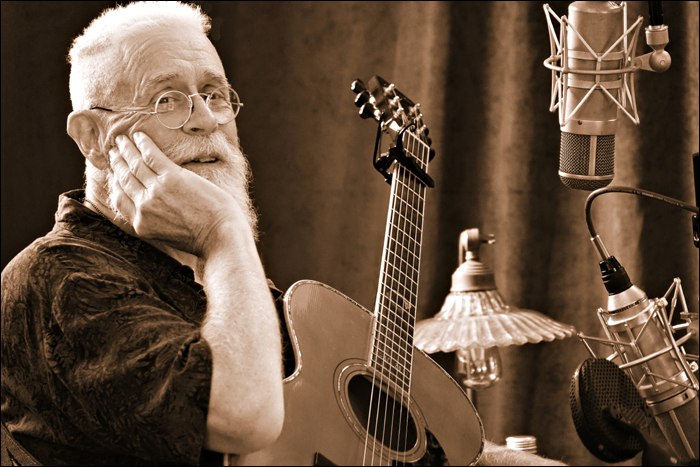
Bruce Cockburn 2023 - photo Keebler

To me, the new album is about priorities, focus, and spirit. What’s your take on the bigger picture it explores?

I think you’ve described it well. I suppose the focus comes from age more than anything else, but it’s also age in the time we’re living in. That latter aspect of it is normal for me. Pretty much all of my songs are responses to what I encounter. I mean, unless they’re fantasies. There are a couple of those in existence. But basically, my songs reflect the period of time in which they were being written and, in this case, that’s the COVID-19 and Trump era, with all this stuff that we’ve had flung at us.

You’ll hear me exploring myself as an older person in that context. There’s a lot of death on this record, but it’s not really specifically death itself. Rather, it’s the anticipation of the approach of that horizon and the kinds of feelings and thoughts that it engenders. The song “When You Arrive” is about that, but in my mind, it’s a kind of joyful song. Perhaps, darkly joyful or ironically joyful. I don’t see this as a dire thing, but it’s an important thing, worthy of attention.

The song “O Sun by Day O Moon by Night” also reflects a positive perspective on our inevitable departure. Tell me about the peaceful view it communicates.

Well, I think the negative perspective is everywhere. We entertain ourselves by watching thousands of departures over our lifetime on TV and elsewhere. But for me, it isn’t another step. I don’t really know what’s going to happen. My own belief is that I will be at least faced with an opportunity to get closer to God. What does closer to God mean? That’s pretty vague. I don’t believe in the Pearly Gates, although the dream in the song you just referred to kind of goes there. Rather, I see all that as symbolic and so I don’t really know what it’s going to be like.

At the very least, the energy that is contained in your body is going to go out to the universe and you do literally become part of everything. I mean we are now too, but we don’t know it because we feel like discrete creatures, but at the point of death, there’s a big change that happens.

So, either way, I think the manner of going is the part that scares us and the part that is too often tragic, and sometimes horribly inflicted on us. But the result of the departure I think can be approached with joy, or at least with kind of joyful anticipation. Not that I’m in a hurry or anything, but I think since it’s inevitable, death is as much a part of life as birth.

“On a Roll” captures a productive, yet realistic worldview at age 77. Talk about the drive and determination it illustrates about you at this moment.

The adventure continues. I don’t take any of it for granted. I do think that it’s going to hit the wall at some point. The hands are going to stop working or something else will happen, but for now, I’m able to keep doing this stuff and I think it might have partly to do with having a young daughter. So, I’m experiencing parenthood again in a deeper and more meaningful way than I did the first time around. She’s 11. I also have an older daughter who’s 46. So, I’m coming at it from a whole different perspective than when I was younger. It’s much more welcome and less fraught this time around, even though the world seems to have more to be fraught about as parents, now. Even though I don’t feel like a particularly young guy, I’m experiencing a lot of aspects of what it is to be a young adult in this culture.

I also get a lot of energy from the people who listen to the songs, and those who come to shows. I like playing for audiences and I like the travel and always have, so that hasn’t changed.

I feel like I’ve been led through the life that I’ve had and that continues, and I don’t really try to second guess it. I don’t take it for granted. It could stop anytime, but I don’t know, it’s a cliche to say, “I’m living in the moment,” but it has something to do with that.

And also, I feel like the journey isn’t over yet. I could see how you could get there. I think if I were by myself at this age and didn’t have a loving family to be in, that might be pretty depressing. Depression sucks up energy like nothing else. I think a lot of people do get depressed because the energy levels go down. They have for me too, but that’s offset by fresh things happening, so I guess it’s easier to deal with.

“Orders” explores how religion continues to be twisted to serve negative agendas, despite many of them stating we’re supposed to embrace one another, regardless of differences. What are your thoughts about how music can help transcend the socio-religious divides of the world?

I’m not confident that music can change anything, but it would be nice if it did of course. You can never carry that notion too far because you don’t know. I do hope that people will be encouraged by “Orders” and what it has to say. It’s one thing to sit there and say, “Oh yeah, we’re supposed to love thy neighbor,” but Christians have been failing to live up to that for 2,000 years. And there’s no reason to think we won’t keep on failing at that. But it doesn’t hurt to be reminded every now and then, that’s what we’re supposed to be doing.

Christians are under orders to do this, and we should be paying attention to that. And then you start thinking, “Well okay, well what does that mean? Who do I have to love?” And “everybody’s” too vague, so I just started giving examples in the song.

After decades of songwriting, what are your thoughts about making messages like that universal, without being didactic?

It’s a balancing act, because it’s easy to slip into preaching, and I’ve been accused of that at times. It’s always concerned me, and I feel like I’ve always had to make an effort not to go there. When you just say some things out loud, it sounds like you’re preaching just because of the nature of the material you’re spouting. People don’t always want to hear my opinion about things true or not. Of course, I think what I’m saying is true, but others might not agree. I do think you’re much more likely to be heard by people if they don’t think you’re preaching at them.

If you go to church or another religious institution, you expect to be preached at. You’ve volunteered for that, and it’s fine. But outside that context, it’s usually on an unwelcome thing. So, what I try to do is just share what I think and feel, and as long as people understand that that’s what it is, then they can take it or leave it. They don’t need to feel preached at. I’ve been blessed with an audience over all these years that’s willing to listen to this stuff and to varying degrees absorb it, and I’m totally grateful for that.

You emerged as a professional musician in the late ‘60s and early ‘70s, when activism and confronting difficult truths was more common. There’s a lot less of that these days. What’s your view on that shift?

You could also include the word “fashionable” in that. In the ’60s, a lot of people were sounding off because it was fashionable. When it stopped being fashionable, they stopped doing it. Not everyone and the real artists, in my view anyway. The ones who haven’t died have kept that up. They maybe had a different emphasis because times change, and we all change to some extent with them. At least our sense of how we fit in things tends to change.

The media, and radio—which is almost weird to talk about anymore—has relatively little importance in any area, except for the obvious pop stuff. I listen to rock stations when I’m driving my daughter to school because that’s the music that she likes to listen to. There’s some good stuff in there. Some of it’s not very good, and none of it really addresses much of what I think is worth addressing.

But then I think when I was a teenager, and even before that. I wanted to listen to Elvis Presley and Buddy Holly, and they weren’t talking about anything very important either. It was a little grittier, at least with Elvis’ songs, because he covered so many great blues artists, or at least drew so much from that world.

Pop music’s always with us. ABBA’s had a resurgence. Who could have imagined that? Back in the ’70s, that was kind of a pet hate of mine. Not ABBA specifically, but that part of the music world they represented. I had no use for it at all. They were making effective pop records that were really successful and that’s fine. Taylor Swift is also doing that, but I think she’s a better songwriter than the people in ABBA. I hope as she matures, that maturity will apply to her songwriting, because I think she’s good at it.

There are many capable songwriters that perhaps aren’t living up to what I imagined their capacity to be. But that’s my imagination talking. Really, I don’t know. Once in a while it seems like there’s been a window in which radio has accepted other kinds of music other than very produced, commercially-directed kind of stuff. And then the window closes after a while when the radio station changes hands and the new owners want more money, or when somebody discovers that they can make more money doing something else.

I’ve been lucky that I’ve been around for a couple of those windows to open and close again. Each time one opens, the audience gets a little bigger and, in my case, it seems like most of the people that have been drawn into my thing have stuck with me.

“To Keep the World We Know” addresses climate change and the idea of looking beyond ourselves. Explore its origins.

The actual song came about because Susan Aglukark called up and wanted to write a song together, and I thought it seemed like a good idea. We had a good time working together on it. The title was mine, but the idea of the world being in flames was hers. We’re seeing all this drought and wildfires all around the world, and it just seemed like something worth writing about.

You think about the future differently when you’re the parent of a young child. I think it’s because there’s an emotional investment in the future that you can’t ignore. With my daughter, the topic comes up tangentially from time to time. There’s no particular agenda. It’s about just paying attention to what’s going on. We talk about it a lot in terms of what she encounters, more than what I encounter. I have a perspective that is different. I’m considerably older than my wife as you can imagine, and so her perspective and mine are also different from each other, but I think mutually complementary.

So, I hope that what we can offer to our daughter is to be useful and that each of our excesses can be tempered by the other. Hopefully, we come up with some sort of reasonable advice and a reasonable context for our daughter to grow up in.

O Sun O Moon has an instrumental titled “Haiku,” and you’ve done two all-instrumental albums in recent times with Speechless and Crowing Ignites. How do instrumentals communicate in a unique way for you?

I think if you have lyrics, you hope if a person’s paying attention to those lyrics, they’ll be drawn into whatever it is they’re about. When you listen to music that does not have lyrics, that doesn’t happen and you’re free to feel whatever the music brings out in you.

I’ve always felt like there was a sense of space that went with instrumental music that doesn’t typically happen with songs with lyrics. If I listen to Bob Dylan, I’m thinking about what he’s saying, as well as savoring the music and whoever’s playing on the record. But if I listen to Japanese flute music or Bach, I’m not doing that. Rather, I’m allowing myself to be transported to wherever that music takes me. For me, that’s often a kind of deliciously-wistful poignant infinity. There’s a sense of that physical space almost. It’s imaginary, but it feels physically combined with time stopping. If you’re seriously listening to something, time stops. Those are the powerful effects I really notice with almost any kind of instrumental music.

Tell me about the choice of musicians on the album and the approach you took when recording them.

I really had a great time listening to what everybody brought to it, and I could do that partly because of the way we recorded. We first started with just me and Gary Craig playing drums and percussion, and once we had that down, we brought everybody in to add to it. So, it was fun to get the songs initially recorded, but the great thing about that was I had the luxury then of sitting back and not worrying about my own performance while listening to what everybody else brought in.

Colin Linden, who produced the album, had a great part to play in the choice of musicians, but we talked about it a bunch beforehand as we’ve done with previous albums. The core band included Victor Krauss on bass and Gary on drums on most of the tracks. Colin came up with Jim Hoke on marimba, clarinet, and sax, and Jeff Taylor on accordion and dolceola.

Jim brought so much to the recording in terms of horn arrangements and marimba playing. It was my idea to have marimba. I’ve always been a fan of Martin Denny and it seemed like some of these songs would suit that kind of sound, and it worked out.

We also have Sarah Jarosz on mandolin, Jenny Scheinman on violin, and Allison Russell, Shawn Colvin, and Buddy Miller on harmonies. I think this was the first time I’ve worked with Buddy, though I’ve met him many times. So, it was great to get him on the album.

It was really cool and a lot of fun to build the album up the way we did it. I kept getting pleasantly surprised by the results.

This wasn’t the first time I’ve worked this way. The albums I did with T-Bone Burnett, including Nothing but A Burning Light and Dart to the Heart, started in a similar way. For Nothing but A Burning Light, many of the songs were done with just me and a programmed, electronic drum track initially. Then we’d replace the fake drums with the real ones. It’s an easier way to get things done.

With Bone on Bone from 2017, we recorded that all live with the band, in the exact opposite way. We put the band together, got everybody in the studio, and just played, with some overdubs.

Either approach can work. If you’re dealing with a lower budget, the approach we took for the new album is good, because you don’t have to pay for people to wait around while you figure out what you’re doing.

We did have a decent budget for this album. But it felt like the approach we took was a better way to spend the money, and it works just as well, creatively. It’s different, though. You don’t get the same sort of spontaneous interplay that you might if you were actually playing live. The lucky accidents are less likely to happen, but on the other hand, you have more control over what happens, too.

Provide some insight into your creative process.

I still just love the guitar. So, sometimes when I’m playing, an idea will come that wants to be an instrumental piece. A riff or ideas that come one after the other can become the bones of an actual composition, and then I’ll chase that down and come up with something else for it. So, over the years, there have been quite a few occasions like that.

Writing instrumentals is different from writing songs where it’s all about lyrics. I like the sense that instrumental music offers something open to the listener’s interpretation. And playing the piece offers something similar to the performer, without being pinned down to specific lyrical ideas. It feels freer in a way. It’s nice to have instrumental things to do.

Of course, I like writing songs, too. When I write a song, I tend to structure things more formally and I tend to write the guitar parts into the song as a composition. So, I kind of play the same way through it, allowing for the occasional solo in the middle of the song. With the instrumental pieces, I still play them the same way, probably, but there’s more of a feeling that this could go anywhere, especially when you get to play it with other people. You just think, “Yeah, we’re jamming now. This is good.”

What are some of the key challenges you face in your creative process these days, and how do you transcend them?

The challenges are mostly physical. I’ve got arthritic fingers and sore feet, and whatever stuff that goes with being older. Eventually, those things might become impossible to get past. They are obstacles, in a way. Some of the older songs that are very simple I can’t play anymore because my fingers just won’t make the shapes I need to make. But that’s minimal. I foresee there will be a point where the songs I can’t play start outnumbering the other ones, and then it’s probably time to retire, but we’re not there yet.

The only other thing that I might put in that challenge category is having to come up with new stuff all the time. Having to do so is a choice, of course, but I don’t want to keep writing the same song. The more I write, the less room there is to come up with new stuff it seems. As much as we can add onto ourselves or subtract from that, as the case may be over time, you’re still essentially the same person you were when you started out, and you feel the same way about a lot of things and have the same vision. So, how do I say whatever it is I want to say without repeating myself excessively? Some repetition is going to show up. So, that comes into it in the writing of a song. Sometimes, I’ll catch myself at it. I’ll write a line, I think “Yeah, that’s cool,” and then be like, “Wait a minute, I said that 20 years ago.” And so, the question becomes, “Okay, well how can I say that in a fresher way?” I’m always still just figuring out how to write a good song.

When you perform solo, you occupy your own unique universe, surrounded by an expanse of instruments and technology. Describe your setup.

Solo concerts are mostly what are coming up this year. I have multiple guitars, because there are multiple tunings. I don’t want to inflict retuning over and over on the audience. I like being able to pick up ready-to-go guitars and just play. I also like the diversity of sounds. There’s the 12-string and dobro, which bring different sounds to the shows. They offer sonic relief from hearing the same kind of guitar sound throughout the night.

It’s a comfortable setup. I have cables, and little bits and pieces of stuff on a table near me, so I don’t have to hunt for things in my pockets or kick the water bottle over to get to them. I’ve also got a little collection of effects pedals to add variety to the mix.

With the acoustic solo shows, it’s about keeping the sound of one guy’s voice and guitar from being too monotonous over the course of the evening. The outcome is also a product of what happens between me and the audience, too, not just the physical stuff on the stage. It’s as much about what the audience gives back, and what I’m able to give back to them as a result.

I use in-ear monitors, because they’re better for my ears, and much more controllable for whoever’s mixing the house sound. They let me hear what the audience is hearing. I need to have that perspective, to have a sense of what I’m throwing at people.

Do solo concerts offer a greater level of freedom compared to ensemble shows?

In theory, they do offer a little more of that. I tend to do things the same every night once I settle on a set that works for me. The shows tend to be the same night after night, with minor exceptions. But theoretically, that freedom exists, if I were not as inclined to want to stick to a pattern. But that’s my nature. I’m just more comfortable when I’m not fretting over whether I’m going to make bad choices as far as the order of the songs go, or just forget what I know.

For the first decade I played solo, I was more spontaneous. I had a list of all my songs on top of my guitar, and I would just look down at that list and think, “Okay, well this one has the capo here and it’s in this key and it’s up-tempo, and I just did a couple of slow ones, so I guess I’ll do this one now.” But that was very stressful sometimes, because sometimes you just look at the list and go “What do I do now?” So, I like it better when I’ve got some sense of flow. I can change it if I want, but when there’s a planned show, my current approach works better for me. It’s also better for the lighting person. I can tell them what to expect and set up cues accordingly. It’s helpful to have things organized like that when I have a band, as well.

This is just my way of doing things. I tend to have a greater need to have the set structured. I can easily imagine being in a band where you didn’t do that. I’ve seen Colin Linden play with his bands where he’ll just turn around and yell out a song title and then they’ll play it. But these days, I feel it’s more practical to have a set list.

You’ve witnessed myriad technological transitions in the music industry across your career. What’s your perspective on its current ability to effectively compensate musicians, and the directions it appears to be heading in?

“Effectively compensate” are the key words. It’s one of the basic ingredients of human existence, and it’s certainly true in the music world. Lately, it’s an issue because of streaming and the fact that it doesn’t really pay royalties. That’s a concern and it has made life harder for musicians. In a sort of good way, it’s put the emphasis on live performances, which is okay because I think that’s when the music is at its most real. But yeah, it would be nice if the various powers that are working on these things could successfully persuade the streamers to pay up.

The music scene has changed totally and it’s still in flux. I don’t think it has settled anywhere yet. All of a sudden, we’re getting AI imitations of famous people. There was an actual virtual pop star in Japan a few years ago. This stuff has been written about in sci-fi books before, but it’s actually happening, and there’s going to be more of that.

Who actually needs humans when you can create a holographic image of somebody that just sounds really great singing and doing whatever? But it won’t replace us in the short term, at least. As I heard myself saying that, I was thinking of the old music union guys in Ottawa that were very upset when people started using synthesizers. They felt they would take jobs away from musicians, but it hasn’t really worked like that. AI probably won’t either, but things are changing all the time. I’m not interested enough in the electronic side of things to want to explore that.

It’s not that you can’t make good music with machinery. You can, but it’s not the same as when people do it. With AI, its function may change too. All of society is moving in the direction of standardizing, unifying, and homogenizing everything. But of course, in our movement in that direction, we’re also dealing with elements of chaos, such as mass shootings, war, and pandemics that work in the opposite direction. Politicians use the fragmentation for their own gain. It’s hard to say if music’s going to reflect all of that and where it’s going to go. I have no idea. I won’t be around to see it.

I mean things never stop. They’re constantly in motion and they’re never going to land anywhere, as long as we’re people with some capacity for imagination. Things are going to keep moving forward and changing. What I do know is things are hard now for musicians. I wish it was easier for musicians to make a living playing music, especially young ones getting started.

Those of us who’ve been around for long enough to have an audience are not in as difficult a situation, but if I were starting out now, how would I get heard? Where would I go? I could put stuff out online and maybe I’ll get lucky, and somebody will notice it. But millions of other things are coming out at the same time. You can find good stuff online, but there’s a lot of amateur attempts that you have to weed through to get to the good stuff, unless where you know what you’re looking for.

Do you plan for the long term with your career or is it more of a case of going with the flow?

The songs on the new album have been in progress for the last couple of years, and it’s just about to come out. So, it’s going to be the focus for the short term. It’s not new for me to be in this position because I don’t really plan ahead with respect to songwriting at all. Once in a while, I have the feeling that I want to go in a particular direction, but that is usually really just about a particular song. Should it be focused on electric guitar or acoustic guitar? What kind of music do these words want? But in terms of the big picture, I’m not much of a planner. Right now, we’ve got gigs booked across the next 12 months, and that’s about as far ahead as I’m taking it. We’ll see what happens creatively between now and then. The field is wide open.

~from www.innerviews.org – Anil Prasad


NEW FROM BRUCE COCKBURN: ‘O SUN O MOON’ – a review

by Ickmusic

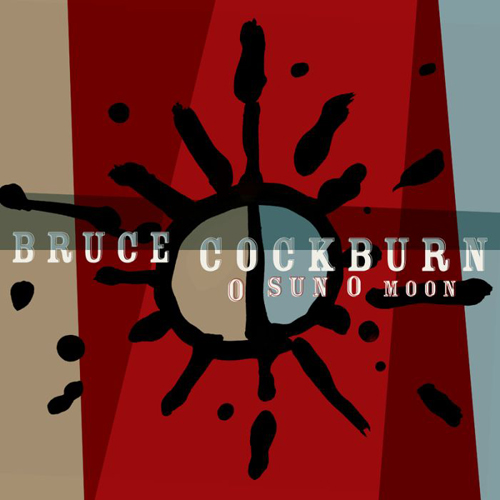
O Sun O Moon - Bruce Cockburn

1 May 2023 – In 53 years of writing and recording, there’s been an undercurrent of spirituality in the music of Canadian Bruce Cockburn. He’s always had a knack for painting a picture of his Christian faith in a way that doesn’t hit you over the head, using the beauty and mystery of the natural world to illustrate the wonder of it all (just listen to my all-time favorite album of his, Dancing in the Dragon’s Jaws, and you’ll know what I mean).

His innate kindness and empathy for his fellow humans has always drawn me to him. Bruce Cockburn is one of the good ones (and criminally underappreciated in these United States, but I’ll digress).

With O Sun O Moon, due out May 12th on True North records, Bruce’s spiritual side steps out of the shadows and, well, “Into the Now.”

Bruce Cockburn will turn 78 this month, and after a tough collective few years for all of us, Bruce brings out themes of faith, mortality, love, conflict and climate in this beautiful collection of songs.

Recorded at on/off band member, album producer & pal Colin Linden’s backyard studio in Nashville, the album features some quality guests – from Buddy Miller and Sarah Jarosz to Shawn Colvin and Allison Russell ( have you heard Nightflyer? – https://www.youtube.com/watch?v=RNJgwj8d9eo ).

From the get go, Bruce faces that ticking clock and his faith head on with “I’m On A Roll”:

Pressure building left and right / Timer ticking, just out of sight / I’m taking shelter in the light
Time takes its toll / But in my soul / I’m on a roll

The powerful “Orders” addresses the oft overlooked yet plain and simple mantra of “Love thy neighbor”:

The sweet, the vile, the small, the tall The one who rises to the call / The list is long — as I recall / Our orders said to love them all

Not an easy concept to adhere to, is it? But nonetheless, as Bruce illustrates so well throughout the record, it’s the foundation of his faith.

With the backing of Shawn Colvin’s beautiful voice, the sweet, laid back front-porch feel of “Push Comes to Shove” continues the message: “push comes to shove / It’s all about love.”

In July 2021, Bruce vacationed in Maui with Dr. Jeff Garner, the lead pastor of the San Francisco Lighthouse church, which Bruce attends. In addition to helping lead a Sunday service, Bruce spent some quality time writing tunes. The first song he wrote is my personal favorite, “Into the Now,” www.youtube.com/watch?v=1jaBq-Z18Ls which has been a staple of his solo acoustic show ever since (I was lucky enough to see him play it in Scottsdale last year). It’s a Cockburn special: timely, poignant lyrics, a chorus that varies each of the first three times before tying all together exquisitely at the end; strung together words like: “Light as the feet of birds hunting on sod / Love trickles down like honey from God”; Sarah Jarosz on harmonies and mandolin. I mean, come on (!), it gets no better.

Another Maui-written song, “Colin Went Down To The Water” was released to streaming services a few weeks back. Featuring background vocals by Allison Russell, Buddy Miller and Colin Linden, the spiritual call and response of the song instantly connected with me (listen below).

The third Maui song is “King of the Bolero,” where Bruce channels a raspy, bluesy vocal to tell the story of a nightclub guitarist who’s “Got a double chin all the way round his neck / And a pot belly in the back.” Not a flattering image, and it makes me wonder who inspired this (internet sleuthing tells me the nightclub in the the Maui Grand Wailea Hotel is the Botero lounge. The Colombian artist Botero is mentioned in the song. Did Bruce write this while taking in some entertainment at the Botero? Hmm…).

Bruce’s resonator guitar, Gary Craig’s xylophone, Viktor Strauss’s bowed bass and Jenny Scheinman’s gorgeous violin usher in the sublime “Us All” (also available on the streaming services). It’s a hypnotic, mournful plea to “let kindness reign for Us All.”

The welcome sound of Bruce’s dulcimer rings in “To Keep the World We Know,” a sobering take on climate change, sung with indigenous Canadian artist Susan Aglukark (who sings in a native Inuit language called Inuktitut). An important message; and rhythmically reminiscent of Bruce’s great 1977 tune “Arrows of Light.” https://www.youtube.com/watch?v=2GfCrNp0nTI

The closing songs of O Sun O Moon bring it all back to the theme of faith & mortality in their own unique ways. The penultimate tune is the prayerful “O Sun By Day O Moon By Night,” featuring spoken word verses building to a joyous chorus prayer with gospel-soaked background vocals:

O sun by day o moon by night / Light my way so I get this right / And if that sun and moon don’t shine/ Heaven guide these feet of mine / To Glory

The album finale, “When You Arrive,” culminates in a singalong chorus featuring the full cast of previously mentioned characters. With a sauntering, New Orleans style rhythm, the repeated chorus brings to my mind an image of Bruce and the gang second-lining lazily down a French Quarter street, shuffling contently off into the distance – firm in their faith – and ready for whatever may be waiting around corner.

Pre-Order O Sun O Moon.
My Top Shelf Bruce Cockburn playlist on Spotify.

Credit: Ickmusic


Bruce Cockburn Announces 44 Date North American & UK Tour

O Sun O Moon - Bruce Cockburn

In Support Of Forthcoming Album, O Sun O Moon, out on May 12 via True North Records

Purchase: truenorthrecords.com/brucecockburn/

Watch lyric videos:

To Keep the World We Know (Lyric Video) – Bruce Cockburn feat. Susan Aglukark

Us All

Colin Went Down To The Water

On A Roll

Listen:

Haiku

April 16, 2023 SAN FRANCISCO Bruce Cockburn has enjoyed an illustrious career shaped by politics, spirituality, and musical diversity. His remarkable journey has seen him embrace folk, jazz, rock, and worldbeat styles while earning high praise as a prolific, inspired songwriter and accomplished guitarist. He remains deeply respected for his activism and humanist song lyrics that thread throughout his career. On all his albums Cockburn has deftly captured the joy, pain, fear, and faith of human experience in song.
Bruce Cockburn has won 13 JUNO Awards, an induction into the Canadian Songwriters Hall of Fame, a Governor General’s Performing Arts Award, and has been made an Officer of the Order of Canada, among many other accolades. He has 22 gold and platinum records including a six-times platinum record for his Christmas album. Cockburn continues to tour internationally.

Download Artist Images Here:
https://drive.google.com/drive/folders/1QtqesbPWqzUDsnZ2o2hTGoHLvut3vL0o

Full O Sun O Moon Bio:
https://docs.google.com/document/d/1gtfFNxWhbI8FIFAwYLOfBK6xWXQmtkI7QgGm6yp_JpQ/edit

“Time takes its toll,” sings the 77-year-old Bruce Cockburn on the opening song, “On A Roll,” his 38th album, O Sun O Moon, out on May 12 via True North Records. “But in my soul / I’m on a roll.”

He’s on a roll.

BRUCE COCKBURN 2023 NORTH AMERICAN TOUR
JUN 1 PLYMOUTH NH FLYING MONKEY CENTER
JUN 2 BEVERLY MA THE CABOT
JUN 3 HARTFORD CT INFINITY HALL
JUN 4 NEW YORK NY CITY WINERY
JUN 7 BETHLEHEM PA MUSIKFEST CAFÉ
JUN 8 PHOENIXVILLE PA COLONIAL THEATRE
JUN 9 WASHINGTON DC WARNER THEATRE
JUN 10 GREENSBURG PA PALACE THEATRE
JUN 12 BUFFALO NY ASBURY HALL BABEVILLE
JUN 13 KENT OH KENT STAGE
JUN 14 ROYAL OAK MI ROYAL OAK THEATRE
JUN 16 CINCINNATI OH LUDLOW GARAGE
JUN 17 NASHVILLE TN CMA THEATRE
JUN 18 ATLANTA GA VARIETY PLAYHOUSE
JUN 24 KENSINGTON CA COVENTRY GROVE
AUG 10 WHISTLER BC OLYMPIC PLAZA
AUG 24 OXFORD UK ACADEMY 2
AUG 25 LONDON UK SHEPHERDS BUSH EMPIRE
AUG 26 KETTERING UK GREENBELT FESTIVAL
AUG 30 BOULDER CO ETOWN HALL RADIO TAPING
SEP 1 PEGOSA SPRINGS CO 4 CORNERS FOLK FESTIVAL
OCT 11 HAMILTON ON FIRST ONTARIO HALL
OCT 12 MONTREAL QB GESU-ELISE
OCT 14 QUEBEC CITY QB IMPERIAL BELL
OCT 16 FREDERICTON NB THE PLAYHOUSE
OCT 17 CHARLOTTETOWN NB CONFEDERATION CENTRE
OCT 19 MONCTON NB CAPITOL THEATRE
OCT 20 NEW GLASGOW NS WELLNESS CENTRE
OCT 21 HALIFAX NS REBECCA COHN
OCT 23 PORTLAND ME STATE THEATRE
OCT 24 OLD SAYBROOK CT KATHARINE HEPBURN ARTS
OCT 25 NORTHAMPTON MA ACADEMY OF MUSIC
OCT 27 RUTLAND VT PARAMOUT THEATRE
OCT 28 ITHACA NY HANGAR THEATRE
OCT 30 NELSONVILLE OH STUART’S OPERA HOUSE
NOV 1 CARMEL IN TARKINGTON CENTRE
NOV 2 MILWAUKEE WI SOUTH MILWAUKEE PAC
NOV 3 CHICAGO IL OLD TOWN SCHOOL
NOV 4 CHICAGO IL OLD TOWN SCHOOL
NOV 17 SANTA MONICA CA MCCABE’S GUITAR SHOP
NOV 18 SANTA BARBARA CA LOBERO THEATRE
NOV 30 SACRAMENTO CA CREST THEATRE
DEC 1 BERKELEY CA FREIGHT & SALVAGE
DEC 2 BERKELEY CA FREIGHT & SALVAGE
For further information, contact:
US – Karin Johnson – karin@markpuccimedia.com
Canada – Eric Alper – eric@truenorthrecords.com
UK – Geraint Jones – gpromo@btinternet.com

~from Mark Pucci Media


Listen to Us All, new song from O Sun O Moon

O Sun O Moon is scheduled for release on May 12, 2023

O Sun O Moon - Bruce Cockburn
Listen to Us All

Bruce’s 38th studio album
by True North Records

O Sun O Moon is Cockburn’s latest studio album available May 12, 2023 from True North Records, a collection of 12 new original songs that demonstrate the songwriting and guitar-playing skills that come from more than 55 years of artistry. He has 22 gold and platinum records including a 6 times platinum record for his Christmas album. Cockburn continues to tour internationally.

You can listen to the track, Us All, on YouTube or on iTunes. You can pre/purchase this album at True North Records.

Track Listing:
1. On a Roll
2. Orders
3. Push Come to Shove
4. Colin Went Down to the Water
5. Into the Now
6. Us All
7. To Keep the World We Know
8. King of the Bolero
9. When the Spirit Walks in the Room
10. Haiku
11. O Sun By Day O Moon By Night
12. When You Arrive


From the album O Sun O Moon – get it here: True North Records
Composer: Bruce Cockburn
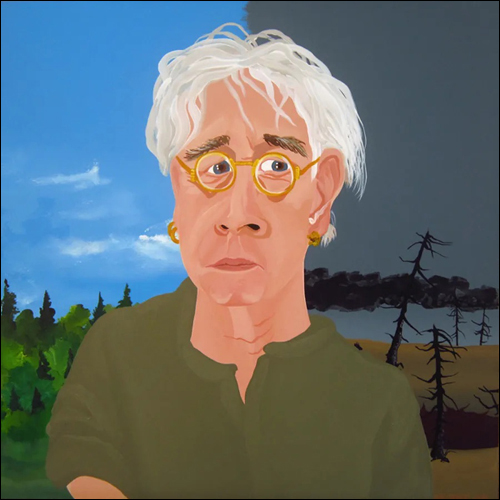
Animation by Kurt Swinghammer
(c) Linus Entertainment Inc. Marketed by True North Records.


Bruce Cockburn: Salem, Oregon Gig Review

by Bob Gersztyn for bluesrockreview.com

On Monday January 30, 2023, Bruce Cockburn performed at the historic Elsinore Theater in Salem, Oregon. Bruce came out using a walking stick and sat on a fleece covered stool that was flanked by guitars on the right and some percussion instruments on the left next to a cooler used for a foot stool. He began the show with an acoustic six string and began playing “After the Rain” from his 1979 release Dancing In The Dragons Jaws. “Night Train” from 1996’s The Charity of Night followed with its droning guitar providing the melodic beat that carried the chugging lyrics.

“Not a knife-throw from here you can hear the night-train passing.”

In 1999 Breakfast in New Orleans Dinner in Timbuktu produced “The Last Night of the World” which Cockburn performed impeccably on his six-string singing about
“The radio playing Superchunk and the friends of Dean Martinez.” After the opening trio of songs Bruce began telling the audience about the popularity of Fidel Castro in Canada in the early days of his government. He explained that he and his brother would play Castro and Batista and Bruce would be Castro. This led to his interest in the Nicaraguan revolution of the 1970s which got him interested in Central America. His brother invited him to visit him to Guatemala while he was working for Oxfam, a Canadian relief organization. When Bruce visited his brother, the trip inspired him to write a number of songs for 1984’s Stealing Fire album including “Dust and Diesel.”

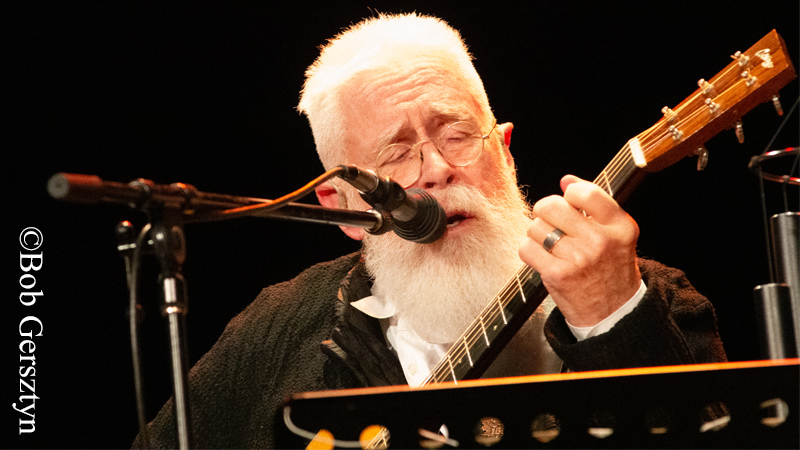
Bruce Cockburn 30Jan23 Elsinore Salem OR photo Bob Gersztyn

2017’s Bone on Bone included the comedic song, “3 Al Purdy’s” which Bruce explained was a documentary film project that he was asked to contribute a song to. Al Purdy was a Canadian poet and the song is about a street vendor selling three Al Purdy Chapbooks for twenty dollars. The song included Cockburn playing his mouth trumpet and was followed by him telling the crowd that this was part of the evening when you meditate as he re-tuned his guitar. He informed the guitar players in the audience that his tuning was DAD GAD which led to “Café Society” from the same album.

This is a new song from an album that will be coming out in May called “Orders” he announced. The lyrics are spiritually charged which is one of the qualities of all Bruce’s music that draws people to it.

“A challenge great—but as I recall
Our orders said to love them all.”

“Strange Waters” is a killer song from The Charity of Night that is a reworking of the 23rd Psalm. Instead of “the Lord leading me besides still waters” the path leads to “Strange Waters.” Bruce told the crowd that he would be back after he took a short break. The second set began when Bruce returned twenty minutes later and picked up his resonator guitar for an instrumental titled “The End of All Rivers,” from 2005’s Speechless album.

He introduced another song from the new album titled “When the Spirit Walks into the Room” performed with the resonator guitar.

“You’re a thread upon the loom
When the Spirit walks in the room.”

After changing guitars back to acoustic six string he dove into “Lovers in a Dangerous Time,” from Stealing Fire as the crowd roared with approval. Bruce did a couple of extended guitar solos demonstrating his mastery of the instrument. Bruce told the crowd that this was the second attempt at the 50th anniversary tour that didn’t happen in 2020; (his eponymous first solo album was released in 1970.) “I’m going way back to an older song” Cockburn announced as he changed guitars to a twelve string and began “In the Falling Dark,” the title song from his 1976 album. The album was the first after he experienced a spiritual epiphany and became a “born again” Christian which led him to explore his faith through his compositions.

Keeping the twelve string Bruce began “Stolen Land” and played an amazing solo that the audience went nuts over clapping enthusiastically. After changing back to the six-string guitar he said “here’s another really old song that pre-dates the fifty years. It came from the 1960’s which he called mystical times and then stated that “the 1950’s sucked but had good music with Little Richard and Elvis.” “Let Us Go Laughing” appeared on “High Winds, White Sky” his second album released in 1971. It’s a gentle mellow song with an intricate guitar solo followed by an up-tempo conclusion.

“Wondering Where the Lions Are” from Dancing in the Dragon’s Jaws drew enthusiastic cheers and clapping as Bruce began one of his most popular songs. The crowd sang along in a call and response on the chorus singing the second verse to his lead. Cockburn told the crowd “you sound beautiful when you sing.” The last song of the set was “If a Tree Falls” from his 1988 album, Big Circumstance. The song is an up-tempo guitar driven excursion into an ecological view of the earth that ended to thunderous applause and screaming as Bruce left the stage.

The crowd’s enthusiasm brought Cockburn back out with two other people. After picking up his twelve-string guitar he introduced Inger Nova Jorgensen on vocals and Jeff Pevar on resonator guitar and vocals. “Five Fifty-One” from 2011’s Small Source of Comfort had Cockburn and Pevar exchanging licks and all three singing in harmony.

“Middle of the night cops come knocking on my door
Still don’t know what my neighbor went and called them for.”

The night concluded with another song from the upcoming album called “Into the Now.” When the trio concluded and took a final bow, they ended the two-hour performance that met the audience’s expectations.

Credit:
Review with more photos


If you’re looking for more gig reports, setlists & photos be sure to check out the cockburnproject.net.


Two Interviews – Give a listen

A Little More Conversation with Ben O’Hara-Byrne
Bruce Cockburn on music & memories

20 January 2023 – Listen to the conversation!
[Bruce is about 26 minutes in)

and

Saskatchewan Weekend with Shauna Powers – CBC
Bruce Cockburn reflects on over 50 years in music

29 January 2023 – Many of us have loved the music of Bruce Cockburn for decades, and his earlier tunes still stand the test of time. They’re sometimes angry, like If I Had a Rocket Launcher, sometimes intimate, like Wondering Where the Lions Are. And they’re almost always poetic. Cockburn had to delay his 50th anniversary tour because of the pandemic, but he’s on the road now and that brings him to Saskatoon on February 9th. Host Shauna Powers speaks to Bruce about the path that brought him to this moment.

Give a listen to this fantastic interview!


FOR BRUCE COCKBURN, THE JOB IS TO TELL THE TRUTH OF THE HUMAN EXPERIENCE

COUNSEL OF ELDERS – BY LYNNE MARGOLIS

13 January 2023 – Fifty-five years into a career that has earned him superstar status in Canada, singer-songwriter Bruce Cockburn is in a reflective mood. In November, he released Rarities, a digital collection of songs previously available only in his very limited-edition Rumours of Glory box set, plus four tracks plucked from tribute compilations and remastered, one very early demo (“Bird Without Wings,” from 1966) and a track heard only on the Japanese version of Life Short Call Now (“ Twilight On the Champlain Sea,” featuring Ani DiFranco). He also reissued audiophile-quality editions of his self-titled 1970 debut album, 1996’s Charity of Night and 1999’s Breakfast In New Orleans, Dinner In Timbuktu.

The San Francisco resident, 77, also became a U.S. citizen in November, a development he calls “quite exciting.” (His wife and 11-year-old daughter are American-born.) In January, he’s kicking off another tour, during which he’ll likely perform tracks from an album he just finished recording. He plans to release the still-untitled work sometime in 2023.

BGS: So what prompted the Rarities release now?

Cockburn: It just seemed like a good time. When my book [the 2014 memoir, Rumours of Glory] came out, we put together a 10-CD box set with all the songs discussed in the book. And there was one disc of rarities. This record is basically the same record, except there’s a couple of extra songs, and there were only 1,000 copies of that box made, so the idea was to get these obscure things — some go back to the ‘60s even, so that is historical stuff, and some live performances and some film music that was never released elsewhere — into wider circulation.

Bird Without Wings

On “Bird Without Wings,” I was struck by the self-doubt of some of the lyrics, which doesn’t surprise me in someone’s early work. I wonder if you would still write a song like that today?

That’s an interesting question. Probably not, not exactly that. I mean, I recognize the person. But my life has been through a lot of changes since then. Back then it was so personal, I hardly ever sang it in public. But a band called 3’s a Crowd recorded it. I didn’t particularly like their version; it was a little too processed for my tastes. That album was produced by Mama Cass and I’m assuming she applied the techniques that the Mamas & the Papas used to get their harmonies, and it might have suited them, but it didn’t really work with that band. In my view, anyway.

You bring up an interesting point regarding how you feel when somebody records your song. Some artists are like, how I feel about it is how big the checks are when they arrive.

Well, that’s a factor, too. It’s not a simple thing. They were more or less friends of mine, so it was a bit awkward. They may have felt that I was less their friend after they heard what I thought of their version, but I wouldn’t be as bothered now, either. When I wrote that song, I’d probably just turned 21. As well as being too personal to sing for people, it was so personal that any sort of departure from my concept of how the song should sound was really hard to deal with. That’s not the case now. I have opinions about different people’s versions of my stuff, but I’ve heard a lot more things happen to my songs since then. Some better, some worse. I’d be more charitable now.

When Folk Alliance International gave you its inaugural People’s Voice Award — created to recognize “an individual who unabashedly embraces social and political commentary in their creative work and public career” — in 2017, you noted it was the first honor you received in the United States. It seems like acknowledgement in this country has been uneven for you.

Yeah. There’s an audience that allows me to tour. But I mean, we had significant radio play in the ‘80s (with) “Wondering Where the Lions Are” and “If I Had a Rocket Launcher” and other songs; as long as it was triple-A radio, my records got played. To the extent that there are some of those stations left, and sometimes on certain shows on public radio, I’ll show up. But it’s certainly not what it once was. I think that it’s partly being not from here. If I were in the pop world, that wouldn’t be an issue because it’s all global. But in the more esoteric area that I operate in, that’s made a difference. The profile in Canada is a lot higher.

But every now and then. … We’re in the process of making a new album, which we recorded at (producer) Colin Linden’s studio in Nashville. I had shipped a bunch of gear there and went to the depot to pick it up. There’s a young woman doing the paperwork, and the supervisor comes by and he looks at the name on that paperwork and he looks at me and he goes, “You’re Bruce Cockburn?” So he turns to all these people in the office, and he’s going, “You gotta hear this guy! He’s one of the greatest musicians in the world!” It was a lovely feeling to hear somebody getting so enthusiastic about it. For me, in this country, that’s quite rare.

Does that ever get old?

Are you kidding? I mean, if people are importuning you because they want something, that gets old fast. But the fact that people are appreciating what they know of what I do? That’s a wonderful thing.

Here’s a quote from the story I wrote about your Folk Alliance award. “When he became known as a political writer, as opposed to previous tags of Christian writer or ‘the John Denver of Canada,’ [Cockburn] said, ‘I had not thought much about the effect of the political aspect of my songwriting; I’d always felt, and I still do, that the job is to tell the truth of the human experience as we live it. I’ve never been interested in protest for its own sake, or in ideological polemicizing. Just fucking tell it like you see it and feel it. If you don’t see it and feel it, write about something else. Songs need to come from the heart or they don’t count for much.’”

It seems like it should go without saying, but it apparently doesn’t.

As somebody who has written political songs, do you feel like those songs still have an impact, or can still have an impact?

Well, they do, in a limited way — assuming that it’s a good song to begin with; that it has something about it that people are going to be tweaked by. It really depends on the fertility of the field on which it falls. If there’s a body of public sentiment around an issue, and a song touches on that, and speaks to that, it will have an effect on people. It’ll help maybe reinforce their feelings and their willingness to get involved, or it may provide a kind of rallying point. But without that, it has no power. It’s really about the people more than the song. But there’s no question that a song like “We Shall Overcome” became an anthem that moved a lot of people who maybe wouldn’t have been so moved were they not invited to sing along with a song like that.

In this era, it’s harder to imagine something like that happening, and I think we’re worse off for it. But what’s your impression as the person on stage or in the studio, or in the room with the pen and paper?

I don’t know. You quoted me there and I kind of stand by that. I think it’s always worth doing. If you see yourself as an artist in the broadest sense, or maybe in the classical sense, let’s say, someone who practices an art as opposed to somebody who gets on TV — not that you can’t be both — but if you see yourself that way, it’s just the job. Sing about what you’re moved by, what you see around you and feel around you and feel coming at you.

For me, the elements of that change with passage of time. But I’m still pretty much the person that I started out being, at the core. I’ve always been playing to a minority audience because of that, and I think that’s what anybody who’s trying to do something real should expect. Once in a while, somebody doing something real cracks through, or there’s a window that opens in terms of the public and the media’s willingness to expose stuff that doesn’t conform to the norm. But those windows are usually not open for long.

Let’s talk about the new album. Anything you want to tell me about the songs you’re writing today?

There’s a lot of spiritual content — not explicitly Christian, although I consider myself a Christian. But I think the impulse to experience something on the spiritual level is universal, and more power to anybody that can go there. That’s partly a reflection of age, too; these are concerns that are larger than some other ones at this point in my life. But there are songs that have topical content; there’s a song called “To Keep the World We Know,” about global warming, that I’ve co-written with an Inuit artist, Susan Aglukark, a Juno Award-winning Canadian. But mostly, they’re personal, which is typical of me.

What about the three rereleases? Why those?

It was the 50th anniversary of True North. It was my 50th anniversary as a recording artist and my first album was the first album on True North Records. So they put out a commemorative thing. This is a better-sounding pressing. And then to go along with that, those two albums from the ‘90s are ones that I particularly like as an example of what I do. Those albums have never been on vinyl. That was the exciting part; there’s something really nice about vinyl. Not just the sound but the tactile thing, the big-format cover and all that.

There’s a couple of songs that are obscure; “Grinning Moon” would have fit on those ‘90s albums. I’m not really sure why it wasn’t included, but I think it’s a pretty good song. There’s another called “Come Down Healing” that includes verses that were recycled into other songs on Charity of Night. There was something about the song that didn’t work for me at the time, but when I listen to it now, it’s pretty good. I like the idea of these being out there and not being completely lost.

That gorgeous guitar intro on “Grinning Moon” really grabbed me. And on “Come Down Healing,” the imagery, the guitar work and the urgency — and I love the lyrics: “Sometimes darkness is your friend”; “On the seven cooling towers of the cancer apocalypse/on the 7 billion dreaming souls.” And to think that you’ve had that song around for this long and it still feels current and important.

This shit doesn’t go away.

That’s why we need people like you, to make sure we know.

Credit: thebluegrasssituation.com