What began back in the eighties as a vague notion grew over time into a strong desire to put together a collection of material, written by others, that I found sticking to the edges of my musical landscape. The accumulation of these songs started in the sixties, before I’d even begun to try to create my own. Some of those stayed in my memory as warm-up exercises, or as relief from hearing myself sing my own words. Every now and then a new one would appear. I’d be fooling around on the guitar and realize I just played something that would fit with — You Belong to Me, for example — and then I would have to actually learn the song. Some of the choices are sentimental favorites, others interesting vehicles for exploring the fingerboard. All of them connect to times and places that remain shadings on the map of a life…
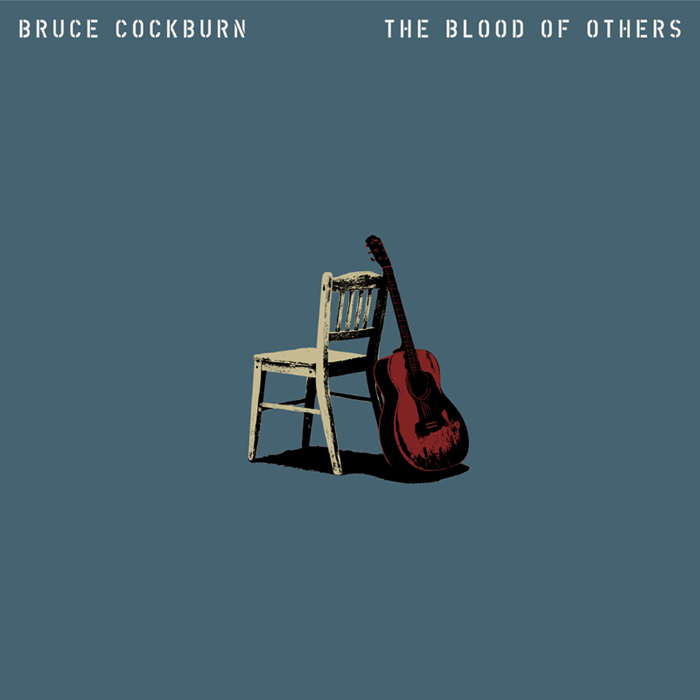
The Blood of Others is a novel, written during the Nazi occupation of France by Simone de Beauvoir. I read it in the seventies and found it very worthwhile. Among other things it deals with personal responsibility in the face of scary oppression, and the kinds of choices people make. I have borrowed the title because it seems perfect for an album of songs I didn’t write.
WISH I WAS IN HEAVEN SITTING DOWN
Robert Wilkins made up this song. I first heard it on an early seventies gospel compilation. Wilkins’ powerful bottle neck guitar and passionate singing made this conversation with God instantly memorable. The original guitar part is simple enough that I could maybe execute it, but it felt right to incorporate some of the angular harmonies that come naturally with the DADGAD tuning.
AS TIME GOES BY
Written by Herman Hupfeld in 1939. Who doesn’t love the scene in Casablanca in which Dooley Wilson plays this song, Ingrid Bergman at his side? I thought I should include the original preamble, which gives the familiar part of the song a context, but it seemed to want an update. Hopefully Herman approves…
BUDDY BOLDEN’S BLUES
I had heard some Jellyroll Morton, but I actually learned this song out of a book, or maybe Sing Out! magazine. My friends were singing country blues and old timey music. I was drawn to the somewhat more sophisticated style of ragtime and early jazz. For an interesting take on Buddy Bolden, said to be the first jazz trumpet player, check out Michael Ondaatje’s novel Coming Through Slaughter.
YOU BELONG TO ME
Jo Stafford’s gorgeously true voice was all over the radio with this when I was five. The geographical references were exciting, awakening the travel bug in me years before On the Road lit a fire under it.
THAT’S ALL RIGHT
Elvis Presley hit the radio in Ottawa right when I was hitting adolescence. He was captivatingly charismatic of course — but the guitar! Scotty Moore’s leads, by turns raucous and tender, bred a burning desire to play the instrument. This was one of the many songs that caught me, though the version I worked out owes more to Arthur Crudup’s original recording.
FOUR STRONG WINDS
The youngest of all these songs. Le hibou, the coffeehouse that was my spiritual home, was on the touring route of most of the artists in the sixties folk scene. Ian and Sylvia were regulars, appearing there a couple of times a year. We were all very excited when their song showed up on the radio.
GOD BLESS, THE CHILD
The 1939 creation of Billie Holiday and Arthur Herzog. One Sunday, in 1960 or 61, I spent my collection money on what was likely a bootleg copy of Belafonte Sings the Blues at the corner store across from Westboro United Church. Tasty jazz arrangements of really good songs. A couple of years later I got to hear Billie Holiday’s original version. Theologically a bit off base, but a deeply moving expression of disappointment with the human species…
LOUIS COLLINS
One afternoon in August or September 1963, Barbie Luther invited me to her parents’ house to listen to music. She opened a bottle of Mateus wine and put on Mississippi John Hurt’s Folk Songs and Blues album. I was blown away by the sweetness, the idiosyncratic phrasing and the way he put voice and fingerpicked guitar together.
YELLOW DOG BLUES
I first heard this on a collection of Bessie Smith recordings around 1962. Right away fell in love with the lyrics. WC Handy copyrighted the song in 1914, having likely composed it some years earlier. When he wrote it he was living in Clarksdale MS. He made good use of the local slang, Yellow Dog for instance, being a nickname for the Yazoo Delta railway.
FARE THEE WELL
My earliest recollection of hearing this song is of Fred Neil’s beautiful version, though I was aware of it before that. It came back to mind when I got to perform it with the McGarrigle sisters at Pete Seeger’s ninetieth birthday event in NYC.
I’LL BE SEEING YOU
I’d heard this 1938 song growing up, sung by Bing Crosby among others. Much later, in the nineties, it came alive for me in a personal way, in the aftermath of a brief but heart-opening relationship. I was driving somewhere with the radio on and somebody’s rendering of it came on. I may have misheard it, but I thought that version ended with the line, “I’ll be looking at someone, but I’ll be seeing you”. That’s not in the original lyrics. They only refer to the moon, but it hit me in a powerful way. Thinking about the song, it struck me that it would work if I gave it a pace and rhythmic treatment in the style of I Only Have Eyes For You.
LAPLEGGED DRUNK AGAIN
Paris, 1964. I was playing for pocket money on the street with a couple of guys. It was the end of a summer of bumming around Northern Europe. I took some of my ill-gotten gains to a record store where I found a large selection of American blues and jazz on 45rpm EPs — cheap, and small enough to fit in a duffel — Petey Wheatstraw, the Mound City Blue Blowers, and Lonnie Johnson. The four pieces on the Johnson EP featured fantastic guitar, elegant vocals and a great band. Five or so years later l happened to come across a newspaper ad for Lonnie Johnson, playing in a supper club — in Ottawa! Some friends and I put on jackets and ties and went to hear him. On a break, we asked him for Laplegged Drunk Again. He shook his head and smiled, and said, “Oh, I can’t play that song in a place like this.”
ONE FOR MY BABY
This 1943 product of the songwriting team of Johnny Mercer and Harold Arlen was originally sung by Fred Astaire in a film I’ve never seen. I first heard it on the Belafonte album mentioned above, but for me, the definitive version is the one Frank Sinatra recorded in 1958. There’s a cool video floating around, that looks as if it’s taken from a TV show, in which he performs the song sitting at a bar with only the bartender as an audience.
LES FEUILLES MORTES
Autumn Leaves is of course a familiar song, having been recorded hundreds of times by everyone from Doris Day to Cannonball Adderley. I didn’t realize it was really of French origin until I came across it in a collection of poetry by Jacques Prévert. Although the English lyrics are fine, Prévert’s words, in which a recitation sets up the sung verses, go a little deeper…
Oh how I wish that you would remember
The glad days when we were friends
Back then life was more beautiful
And the sun burned hotter than today
The dead leaves pile up in the shovel
See, I haven’t forgotten
The dead leaves pile up in the shovel
Memories, regrets as well
And the north wind carries them away
Into the cold night of forgetting
See, I haven’t forgotten
The song you sang me…
It’s a song that brings us together
You loved me, and I loved you
We lived, both of us together
You who loved me, I who loved you
But life separates those who love each other
Softly, making no sound
And the sea erases from the sand
The steps of lovers, disunited
PEACE IN THE VALLEY
Another gem of a song I first
heard from Elvis. Thomas A. Dorsey (known in another life as
Georgia Tom) wrote it in the late
thirties for Mahalia Jackson.
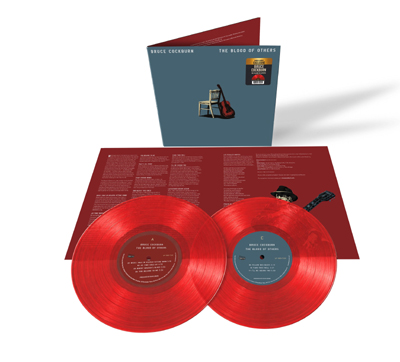
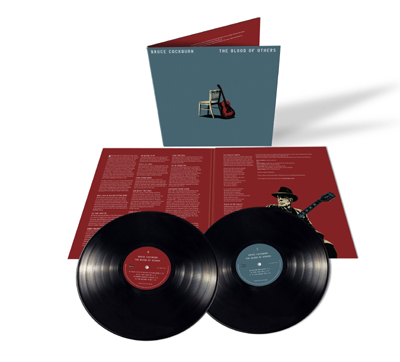
Pre-order the album now on CD, Vinyl and Barnes & Noble Booksellers exclusive Apple Red Vinyl.