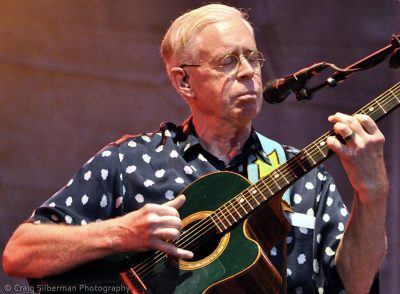
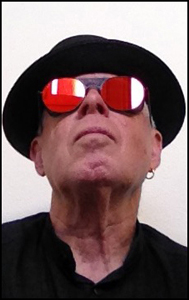
We sat down with Bruce Cockburn after the release of O Sun O Moon – his latest album in a distinguished career spanning five decades. Cockburn discusses creativity, guitars, songwriting, and even gives us a lesson in EADGAD tuning.
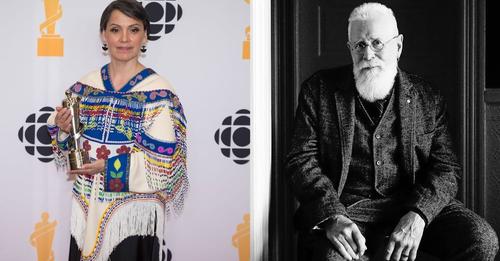
What the Oppenheimer movie gets right about the treat of nuclear war, the impact of period-proof gear at the Women’s World Cup, Bruce Cockburn and Susan Aglukark on their new song, To Keep the World We Know, and more.
by Barry Alfonso – sandiegotroubadour.com
August 2023
Bruce Cockburn is the guy who wondered where the lions were. Then he asked for a rocket launcher. That was almost 40 years ago. He’s done a great deal since then, but those two songs—as different as a cheery hello and a punch in the face—still define him for many. If you’ve followed Cockburn’s career more closely, you know that his personae as the bemused, inward-dwelling mystic and the angry transnational activist exist on an artistic spectrum where one informs the other. Among the singer-songwriters of his generation, Cockburn is an artist who slips between borders, avoids close affiliations, and keeps himself free to blend into another scene. He has always been more than the sum of his sometimes-clashing personae, making him seem both open-hearted and elusive at once.
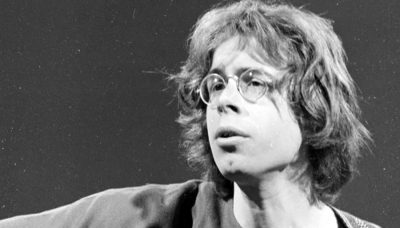
A brief overview: Born in Ottawa, Ontario, Cockburn spent an apprenticeship with various Canadian rock bands before going solo and releasing his eponymous debut album in 1970. A string of mostly vocal/acoustic guitar-centered releases followed, with jazzier embellishments added by the mid-1970s. Mostly overlooked in the U.S. during this time, he suddenly broke through with the whimsical, Jamaican-accented Top 30 single “Wondering Where the Lions Are,” taken from his excellent 1979 LP Dancing in the Dragon’s Jaws. Critics made note of Cockburn’s Christian faith, though its impact on his songs was usually indirect. Rather than continue to release albums as a typical “sensitive singer-songwriter,” he made a hard left turn into political commentary in the early ’80s. Outrage at First World militarism and corporate greed spawned tunes like “If I Had a Rocket Launcher,” “Lovers in a Dangerous Time,” and “Fascist Architecture.” Though he added synthesizers and other MTV-era touches, Cockburn remained an acoustic folkie at heart—his fluent and often dazzling guitar playing was always a highlight of his work. In the 1990s, he brought together his spiritual reflections and social justice concerns on a series of memorable albums, with Nothing but a Burning Light and The Charity of Night particularly standing out. Subsequent projects have found Cockburn adept at everything from spoken-word passages to evocative instrumentals, all bound together with a cool yet committed intelligence that seemed at once worldly wise and deeply humane.
Cockburn’s latest album, O Sun O Moon, is very much in his tradition of thoughtful commentary, spiritual yearning, and slightly rueful self-reflection. At 78 years old, the artist is working within his limits—arthritis has forced him to find new chords and otherwise modify his still-masterful guitar playing. If time has brought him physical challenges, it hasn’t narrowed his perspective or caused him to flinch in the face of mortality. “You’re limping like a three-legged canine/Backbone creaking like a cheap shoe,” he sings with droll languor as he considers the afterlife in “When You Arrive.” “To Keep the World We Know” (a collaboration with Inuit singer-songwriter Susan Aglukark) is a warning against imminent disaster very much in the tradition of Cockburn’s earlier protest pieces. The dominant mood here, though, is one of acceptance, redemption, and transcendent love. He finds a way to embrace “the pastor preaching shades of hate” and “the self-inflating head of state” in “Orders” without closing his eyes to their failings—or his own. He looks toward an ultimate interweaving of humanity’s clashing colors: “We’re all threads upon the loom/When the spirit walks in the room…”
One of the most interesting things about Cockburn is how his perspective about life and the role of artist changed as he grew older. As he tells it, the breakup of his first marriage and touring beyond North America forced him to mature out of folkie insularity and open his eyes to the harsher realities of the world. “On the very earliest albums I really sound like a kid from the’60s,” he told me in a recent phone interview. “I hear it in my voice as much as anything. I was inwardly focused then; I paid attention to the spiritual stuff, which seemed appropriate and still does, but I didn’t really understand people at all. I’ve come to understand a lot more about that as time has gone on, and I can hear the difference in the songs.”
As he ventured out of his shell, Cockburn began to see himself as a kind of musical correspondent, reporting from scenes of conflict and suffering and bearing witness with a minimum of preachiness. A trip to Central America under the sponsorship of the charity Oxfam in the early ’80s particularly opened his eyes. Calling what he wrote “documentary poetics” rather than protest songs, he filled albums like Stealing Fire (1984) and World of Wonders (1986) with reportage from Chile, Germany, Italy, the Caribbean, and other locales. Through it all, he tried to be accurate rather than strident about the injustices he saw—a stance even harder to maintain today thanks to the stark political divisions of the moment.
“I think the challenge is to find a non-polarized point of view from which to view it all,” he says. “That point of view is available to everybody, but it can be a little tricky to get there, because we all feel the emotional impact of the stuff that’s around us. It requires a certain intellectual rigor—if your own spirit doesn’t get you through, then your brain has to do so. I think it shows up in some of the new songs, like ‘Orders,’ which comments on the current goings-on from a position of not judging or at least not confronting in a hostile way. Hopefully, a lot of people are going to be doing that, because otherwise, we’re in a lot of trouble, even more than we’re in now.”
There are some pieces of musical reportage that Cockburn would file differently today. “If I Had a Rocket Launcher” was composed after he toured a Guatemalan refuge camp in Mexico. Its lyrics were written from the viewpoint of a displaced victim of government terrorism—but listeners have sometimes taken it as a personal statement by the artist. “That song has been greatly misunderstood by many people,” he says. “It’s the kind of song I would only write once—it came out of sharing the time and space with people whose life experience is totally different from mine. I would be very hesitant to risk being misunderstood that way again. I didn’t write it to incite people to shoot Guatemalan soldiers. It was more of a cry of horror at how easy it is to get into that mindset. With that mindset all over the place right now, everybody knows how easy it is and they don’t need me to help them.”
(In 2009, Cockburn performed “If I Had a Rocket Launcher” in Afghanistan, where his brother John was stationed with Canadian troops. The commanding officer presented Bruce with a rocket launcher, which he chose not to keep.)
Cockburn’s particular take on Christian faith has likewise caused some confusion over the decades. His beliefs always had a mystical tinge that emphasized spiritual joy rather than sectarian dogma. When his music became better known in the U.S., he made his contempt for right-wing Moral Majority preachers like Jerry Falwell clear. Always open to insights gleaned from other faiths, he gradually drifted away from church attendance. Though spiritual references never disappeared from his songwriting, O Sun O Moon reflects a renewed interest in Christian worship with fellow believers.
After moving from Ontario to Northern California with his wife and young daughter in 2009, Cockburn began attending the San Francisco Lighthouse, a non-denominational Protestant church whose inclusive message resonated with his own outlook: “I hadn’t gone to church in decades, but I was led to this church and to a renewed focus on the spiritual realm. It partly has to do with age—the approach of that horizon is something you can’t ignore.”
Intimations of mortality are found throughout O Sun O Moon, offered with a mixture of awe, acceptance, and wry humor. Particularly haunting along these lines is “Colin Went Down to the Water,” a hymn-like tune inspired by a tragic incident: “It’s about a friend of mine. We’d made plans to get together in Maui. I phoned him when I arrived—it was Wednesday, and we were going to meet for a drink the next Monday. On Saturday, I got a call from a mutual acquaintance. He told me that Colin had drowned in a scuba diving accident. I went back and listened to a voicemail he’d left me: ‘Hello, Bruce, this is Colin. Welcome to heaven!’ He wasn’t a close friend, but he was a good guy and hearing that was strange and moving.”
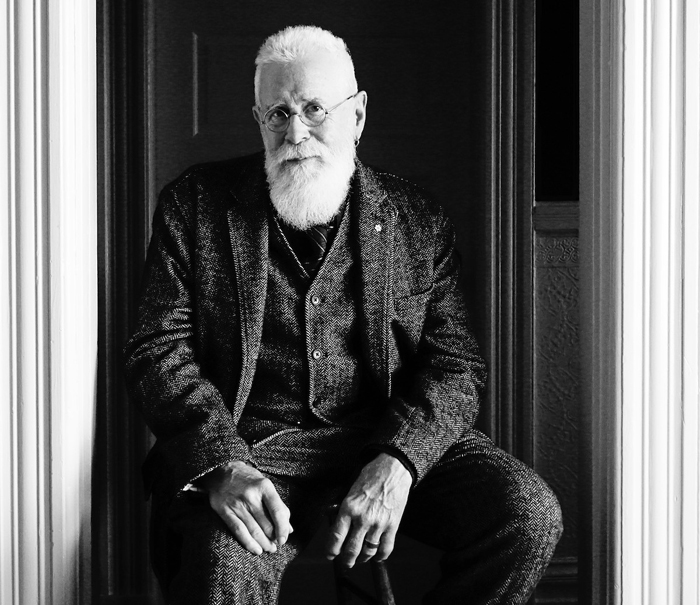
Cockburn embraces his status as a musical elder with grace and a definite ocular twinkle. These days, he sports a long snowy-white patriarchal beard worthy of Father Time (or David Letterman). At a June 2023 solo acoustic concert in Greensburg, Pennsylvania, he came on stage with the aid of two canes and remained seated during his set. As fans shouted out requests, he explained that there were certain songs his arthritis kept him from playing, “If I Had a Rocket Launcher” among them. That noted, Cockburn more than acquitted himself on guitar during a set that featured tunes from his earliest albums as well as his most recent work. Switching from six- and 12-string guitars to dulcimer and dobro, he moved easily among the eras and phases of his complex and sometimes paradoxical career. Reaching back to one of his earliest LPs, he sang “Everywhere I go, the blues got the world by the balls,” lyrics that seemed accurate when he first recorded them in 1973 and are probably even more so today.
If not closure, Cockburn seemed to be finding unity in the disparate phases of a half-century’s worth of music-making, looking forward and glancing back simultaneously. When we spoke, I asked him if there was something he might say to the Bruce Cockburn of 1970. “Don’t be so fearful,” he quickly replied. “I would say that a lot of the stuff you think is really important doesn’t matter that much.” This led to advice for beginner artists: “Keep your integrity. You can entertain people and be truthful. You can say, ‘I’m going to write a song that rhymes with whatever so I can have a hit’ and that might work, but it won’t work for you for long.”
Bruce Cockburn has made his unique blend of heavenly aspirations and gritty poetic reportage work rather well for over 50 years. Between the lions and the rocket launchers and beyond, he has covered a lot of ground as well as considerable inner space. He remains a traveler between worlds and a messenger who speaks multiple spiritual languages. “With songwriting and performing, there’s that leap where you hope you’re giving people something that suits them,” he says. “I’ve been doing it long enough that you’d think I would have got it by now. But you never quite get it. There’s always something to learn.”
Bruce Cockburn will be performing at McCabe’s Guitar Shop, 3101 Pico Blvd., Santa Monica on November 17, 2023.
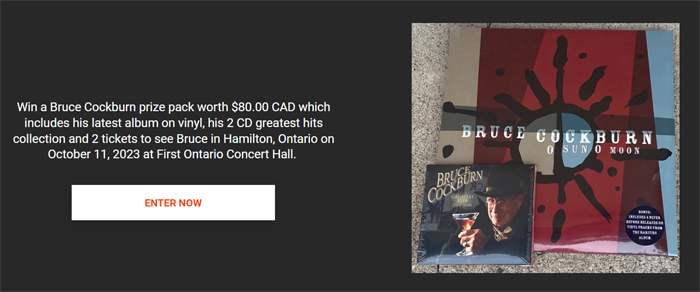
Win a Bruce Cockburn prize pack worth $80.00 CAD which includes his latest album on vinyl, his 2 CD greatest hits collection and 2 tickets to see Bruce in Hamilton, Ontario on October 11, 2023 at First Ontario Concert Hall.
6 June 2023 – Bruce Cockburn, the Canadian singer-songwriter who has known decades of success and accolades without ever quite becoming a household name, is 78 years old and on a roll. Just ask him.
In “On a Roll,” the opening track on his new album “O Sun O Moon,” Cockburn (pronounced CO Burn), sings “Time takes its toll/ but in my mind/ I’m on a roll.”
“There are issues that didn’t used to be there. Arthritic fingers take a little more babying and fussing with to get them to work than used to be the case,” he explains, regarding the “time takes its toll” lyric.
“I don’t have the energy I had when I was younger, there’s no doubt about it.
“And yet I feel like I have a better understanding of my relationship with God,” he continues, on a roll as it were. “I also feel like everything is lighter. There are real things to worry about in the world. But the way in which we concern ourselves changes over time. The things that used to be a great source of stress now are more like shaking your head and saying ‘Well, there you go.’”
Cockburn launched his musical career in 1970, and of his more than 30 albums, 22 are Canadian gold or platinum. A member of the Canadian Music Hall of Fame, he is best known for his songs “Wondering Where the Lions Are” (1979) and “If I Had a Rocket Launcher” (1984). His music flits from folk to pop to jazz to indigenous influences, and his lyrics range from love songs to Christian allegories to impassioned songs about political prisoners and climate change.
Cockburn’s current tour, in which he plays solo without a backup band, brings him and opener Dar Williams (another singer-songwriter, herself frequently a headliner at mid-sized venues) to Variety Playhouse June 18. Cockburn’s scheduled 2020 Atlanta concert was scrapped because of the pandemic, so the last time he played here was 2018.
Asked in a recent telephone interview why he is touring solo this time, he chuckles and chooses honesty. “I get to take home more of the money,” he says. “That’s not the only reason for doing it this way, but it counts.
“The solo experience tends to be a little bit more emotional for me,” he elaborates. “There is an exchange of personal energy between all of us in the room.”
In his eighth decade, his lyrics are pared down, but with plenty of wisdom embedded. “What will go wrong will go wrong/ What will go right will go right/ Push come to shove/ It’s all about love,” he writes in a love song to his wife, M.J.
“Orders,” one of the stronger new songs, is a take on the Golden Rule in which he lists all the people he is ordered by God to love, no matter how hard it is, including “the one we think we’re better than.”
“It took a lot of time to write that one. I don’t remember what triggered the idea. I wrote pages and pages and pages listing all the possible people we have to bite the bullet and love. Then it was whittling it down to a manageable size.”
But the biggest recurring theme is mortality.
“The whole album’s about death pretty much,” he says. “But I even feel lighter about that. Not about tragedy or pain or people dying when they shouldn’t. That’s all real and not something you can take lightly. It’s tragic when it’s a school shooting, but when its someone who has had a full life. … You have a life; you have to leave it at some point.”
He says he is comfortable pondering his own mortality. “When the moment comes, I’m probably going to be panic stricken like everyone else.” Again with the chuckle.
“But contemplating it from where I’m currently looking, it’s not that scary. It’s gonna be what it is. I have some concerns about what I’m going to encounter afterward. It could be what I imagine, or it could be nothing. But as that horizon gets closer, it just feels natural.
“My relationship with the divine is front and center in my life,” he continues. My fear, if there is a fear, is that I will come face to face with God and not recognize Him.” He drops another chuckle into the conversation. “I hope to get past that.”
June 7
Bruce Cockburn on releasing his 38th album
The Canadian singer-songwriter also tells the story behind his song To Keep The World We Know.
Three things are certain in life: death, taxes and a new Bruce Cockburn record. Believe it or not, the singer-songwriter has just released his 38th studio album, O Sun O Moon. He joined Q’s Tom Power to talk about the album and introduce us to one of its songs, titled To Keep The World We Know.
31 May 2023 – Over the course of his 53-year career as a solo recording artist, Bruce Cockburn has won admiration for the finely crafted imagery and poetically descriptive details of his personal and political songs, the subtly emotional quality of his vocals and the virtuosity of his guitar playing. He’ll be making a comparatively rare Cincinnati appearance at Ludlow Garage on June 16; Dar Williams is opening the show.
Granted, his fame is greater in his native Canada than in the U.S. There, he’s regarded on equal footing with fellow Canadians Leonard Cohen and Gordon Lightfoot as a major singer-songwriter. (Cockburn has lived in San Francisco since 2009). But he has had an appreciative U.S. following ever since he scored a hit single in 1979 with the gently catchy “Wondering Where the Lions Are.” It may be, he has said, the only top 40 song ever to contain the word “petroglyphs.”
His other songs — particularly “Lovers in a Dangerous Time,” “If I Had a Rocket Launcher,” “Pacing the Cage” and “Waiting for a Miracle” — have become recognized here through either album rock airplay of his own versions or covers by such artists as Jerry Garcia, Shawn Colvin, Barenaked Ladies, Judy Collins and more. Though written earlier, “Lovers in a Dangerous Time” and “Pacing the Cage” drew increased attention during the worst of the pandemic.
It really is a distinguished, accomplished career in retrospect. But at age 78, he’s not looking backward. On his new record, O Sun O Moon, his 38th studio album, he begins with a bluesy, soulful rocker built around this memorable refrain: “Time takes its toll/But in my soul/I’m on a roll.”
It seems a pretty upbeat notion, driven along by a hot electric guitar solo by Colin Linden, who also produced the record. So CityBeat’s first question to Cockburn during a phone interview is if the song is meant as a motivational statement for the audience that has aged along with him.
At first, he laughs, then addresses the inquiry with the kind of serious introspection that has been a constant in his career. “I think I’m talking to myself as much as to you,” he says. “But that’s all right if they (his audience) think that. We all hope people will pay attention to the album.”
“On a Roll” is a good example of how his songs can make you think and, for that matter, how much thought goes into the songwriting. Positive as that refrain seems, the verses aren’t morale boosters. An example: “Howl of anger, howl of grief/here comes the heat with no relief/social behavior/beyond belief/throw those punches, drop that ball/commit to nothing, excuse it all/here comes the future/here comes the fall.”
The song’s seeming positivity relates to Cockburn’s searching, questioning, non-violent view of Christianity, to which he’s long been devoted. “Looking around the world, it’s in a mess and that’s nothing new,” he explains. “In the Trump era in America and then post-Trump, the notion of bad manners sort of vanished, along with the notion of good manners. So there’s a reference to that and all these other things going on — this external chaos.
“But inside, well, I’m getting older — that’s time taking its toll,” Cockburn continues. “But at the same time, I feel like I’m getting closer to the relationship with the divine that I want and hope for. I can’t really define that relationship very well for you, but that’s been a theme of mine from the get-go, so it’s a hopeful statement on a personal level in spite of all the crap going on around us.
“It’s probably not for everybody, but I don’t think I’m alone on this,” he explains about his religious belief. “As the horizon approaches, you start thinking about what’s on the other side. I don’t want to meet God and not recognize him. That matters to me. That’s the driving principle behind my ongoing efforts to get that relationship in good shape.”
(Cockburn expresses those thoughts even more directly on the new album’s strong closing song, “When You Arrive”).
Born in Ottawa, he took an early interest in music, especially jazz, and went on to study composition at Boston’s Berklee School of Music in the mid-1960s before dropping out. He then found his way into rock and folk.
As his career and following developed, so, too, did his concern with war and economic inequities. One of his most memorable and controversial songs, 1984’s “If I Had a Rocket Launcher,” came about after Cockburn visited a Mexican refugee camp for Guatemalans fleeing the brutality of their country’s military government.
The song shocked fans who regarded Cockburn as firmly non-violent; others saw it as a rallying call to arms against government-sponsored violence.
It’s a song Cockburn still finds a need to explain today — it’s about him being glad he didn’t have a rocket launcher handy. “The word ‘if’ gets overlooked a lot when people think about that song,” he says. “One of the things I was trying to say is that the enemy — in this case, the Guatemalan military — was inflicting horrendous abuses on its own citizens and forfeiting any claim to humanity by their actions. I was outraged by those things, and my outrage was motivating the song. I don’t think it was an appropriate response really, but I wanted to share with my peers how easy it is to get into that state of mind.”
When Cockburn includes the word “love” in his songs — and he does so on four different O Sun O Moon tracks — he doesn’t do it casually or as a songwriting cliché. His vision of love somewhat parallels his vision of beauty in life. On one of the new album’s loveliest ballads, the quietly hymnic “Us All,” he sings, “I pray we not fear to love/I pray we be free of judgment and shame/Open the vein/let kindness rain/rein/O’er us all.”
“Every now and then, something in your life triggers this sense of being part of the human picture — that feeling to me is love,” Cockburn explains. “When I think about what love is, it’s the glue that holds the universe together, or at least it allows us to tap into our sense of belonging in the universe.
“The love that we can share with other people is a manifestation of that. It’s kind of love at the local level, you might say.”
Bruce Cockburn plays Ludlow Garage at 8:30 p.m. June 16. Info: ludlowgaragecincinnati.com.
There is truth in the statement that some things get better with age. Case in point, Bruce Cockburn’s new album O Sun O Moon serves up a heaping helping of musical goodness.
Recorded in Nashville, this is Cockburn’s 38th studio release, and from the get-go Cockburn reminds us that he still has plenty to say. His brilliant guitar playing is complemented by a crew of superb musicians, and this has allowed him to experiment with some different styles over the course of the 12 tracks.
The album starts with “On A Roll” and Cockburn plays a bluesy lead guitar riff that immediately captures attention. He reminds us that he’s still here with the lyric, “time takes its toll, but in my soul I’m on a roll”. As with every track on O Sun O Moon, the production is first-rate, allowing every nuance to be heard.
“Push Comes to Shove” is the third track on the album, and this lovely acoustic number has a distinctly ‘Parisian café’ vibe. However, Cockburn reminds of his environmental activism with lines like, “I could sail what’s left of the seven seas”. The effect is poignant and bittersweet.
The most unusual song on this release, as also acknowledged by Cockburn, is “King of The Bolero”. Over a backdrop of New Orleans-style horns and a woozy clarinet line, it paints a vivid picture of an old barroom musician using imagery that Cockburn had in his head for years and finally decided to set to music. It is a standout, and if it makes its way into his live shows, it will quickly become a favourite.
The album closes with another jazzy number, “When You Arrive”. The lyrics describe Cockburn feeling his age, but also accepting the fact that he is getting older. His talents as a lyricist are on full display here, including a great line that says, “You’re limping along like a three-legged canine, backbone creaking like a cheap shoe”.
O Sun O Moon reminds us why Bruce Cockburn has had such a successful career, but amazingly, especially after 37 previous releases, that he also has something new to say. This is a fantastic album, from start to finish.
Legendary Canadian singer/ songwriter Bruce Cockburn has not just released a new album but is also back on the road with a tour. Rudy Blair Entertainment Media (rudyblairmedia.com) speaks with the multi Juno Award winner about his thoughts on the late Gordon Lightfoot, his tour, the story behind one of his greatest hits “Wondering Where The Lions Are” ( https://bit.ly/3IfMEM7 ) and his latest album “O Sun O Moon” featuring the single “Colin Went Down To The Water”
Credit: Rudy Blair
rudyblairmedia.com
(Video background created by Motion Graphics provided by https://www.tubebacks.com